
Flat tires can happen anytime — on a quiet morning commute, a long road trip, or even right in your driveway. Knowing how to change a tire safely is a valuable skill every driver should have. This simple, step-by-step guide will walk you through the process so you can get back on the road quickly and safely.
🔧 What You’ll Need
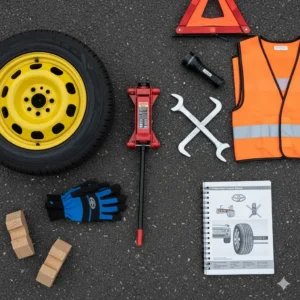
Before you begin, make sure you have these essential tools:
Car jack
Lug wrench (tire iron)
Fully inflated spare tire
Vehicle owner’s manual
Wheel wedges or bricks (for safety)
Reflective vest and warning triangles (optional but recommended)
🚗 Step 1: Find a Safe Location

As soon as you notice a flat tire, slowly reduce your speed and look for a safe, flat area away from traffic. Avoid stopping on curves or narrow shoulders. Turn on your hazard lights and apply the parking brake.
🧱 Step 2: Secure the Vehicle

Place wheel wedges or heavy objects behind the tires opposite the flat one to prevent the car from rolling. If changing a rear tire, wedge the front wheels — and vice versa.
🔩 Step 3: Loosen the Lug Nuts

Use your lug wrench to turn the nuts counterclockwise. Don’t remove them completely yet — just break their resistance while the car is still on the ground.
⬆️ Step 4: Raise the Vehicle
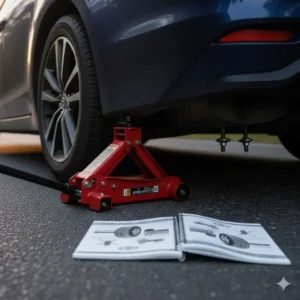
Consult your vehicle’s manual to locate the correct jacking point near the flat tire. Carefully raise the vehicle until the flat tire is about six inches off the ground. Never crawl under the car while it’s raised.
🛞 Step 5: Remove the Flat Tire
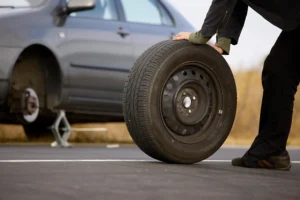
Fully remove the loosened lug nuts and place them somewhere safe. Gently pull the tire straight off the wheel bolts.
🔁 Step 6: Mount the Spare Tire

Lift the spare tire onto the wheel bolts, lining up the holes carefully. Push until the tire sits flush against the hub. Replace the lug nuts by hand and tighten them slightly.
🔧 Step 7: Lower and Tighten
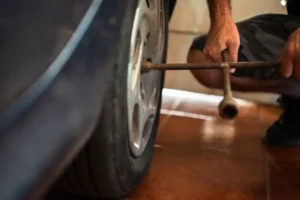
Lower the car until the spare just touches the ground. Then, tighten the lug nuts in a star pattern — one nut, then the one directly opposite — to ensure even pressure. Finish tightening once the car is fully lowered.
⚙️ Step 8: Check Your Work
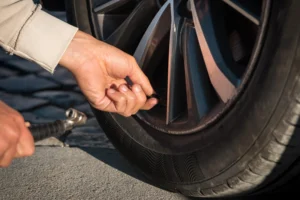
Give each lug nut a final check to ensure it’s secure. Stow your tools and the damaged tire safely in the trunk.
🧭 Step 9: Drive Safely

Spare tires, especially compact “donut” spares, are meant for short distances only — typically under 50 miles and no faster than 50 mph. Drive carefully and get the flat tire repaired or replaced as soon as possible.
🛠️ Pro Tip: Prevent Future Flats

Check tire pressure monthly.
Inspect tread depth regularly.
Avoid potholes and debris on the road.
Rotate your tires every 5,000–7,500 miles.